

Expensive power tools, electronic components, precision instruments, and spare parts are some items that face constant security threats in industrial environments. From specialised diagnostic equipment worth thousands of pounds to important components that can halt production lines, businesses struggle with theft, shrinkage, and accountability issues that can disrupt operations and impact profitability.
Lockable stillages offer a practical solution to address these security challenges. Instead of relying solely on perimeter security or fixed storage areas, these mobile secure storage units protect assets directly.
Why Do Traditional Storage Methods Tend to Leave Goods Vulnerable?
Open pallets and unsecured crates create security risks that some businesses underestimate. When items are stored without adequate containment, they’re easy targets for external theft and internal shrinkage. High-value tools, electronic components, or specialised equipment can disappear quickly from accessible storage areas.
Accountability becomes challenging when goods are not contained in secure, trackable units. You cannot effectively audit inventory or pinpoint when and where losses occur, making it difficult to address security gaps.
Operational disruption is another issue that can become more costly than the stolen items. When mission-critical tools or components go missing, projects can face delays and downtime that can cost more than replacing the stolen goods.
What Are Lockable Stillages and How Do They Work?
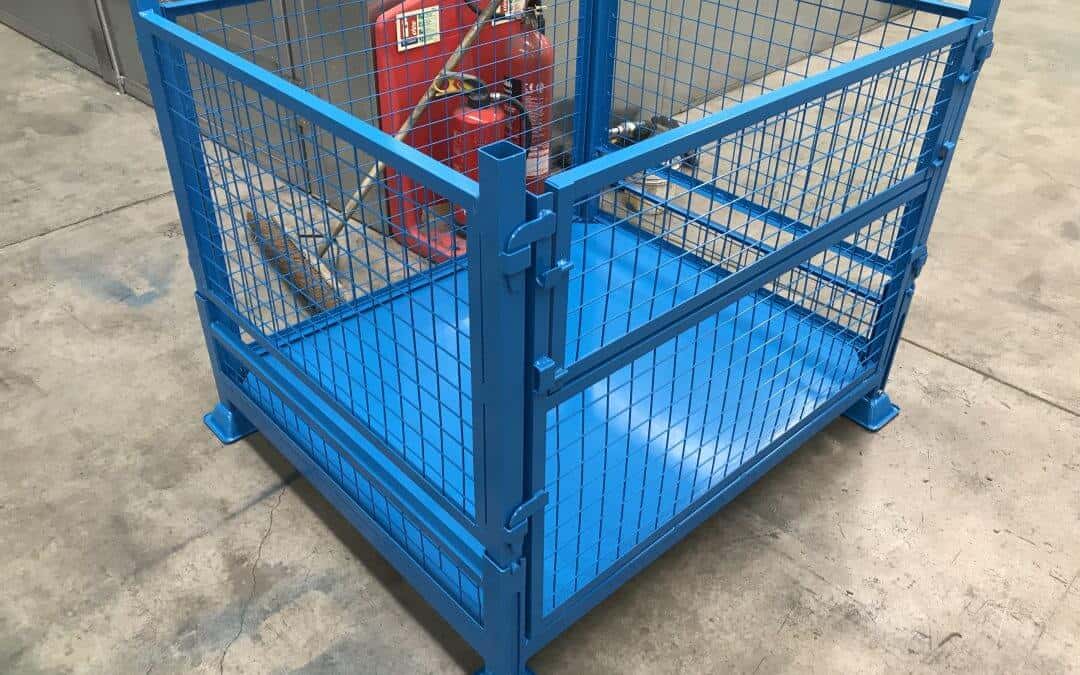
Lockable stillages are purpose-built steel cages designed for secure storage and transport of valuable goods. These fabricated units feature heavy-duty steel mesh or solid sheet steel sides with a hinged, fully enclosed lid that secures with a heavy-duty clasp designed for high-security padlocks, turning a standard cage into a secure, mobile vault.
We at Range Storage manufacture steel stillages that incorporate proven security features through robust engineering. Our lockable stillage designs provide comprehensive security while being flexible in everyday use.
The construction involves fully welded steel frames that resist forced entry, with integrated fork pockets that allow safe forklift handling. This design ensures your secure storage solution remains mobile and can move with your operational workflow.
How Do Lockable Stillages Provide Secure Storage?
Lockable stillages deliver security through three fundamental approaches that address different aspects of asset protection.
Physical Security Features
- Heavy-duty steel frame construction with full welding for maximum rigidity and resistance to forced entry.
- Cut-resistant steel mesh or solid sides that standard tools can’t easily breach.
- An interlocking lid design that creates a secure seal with the main body.
- Shielded locking points that protect padlocks from bolt cutters and other cutting tools.
- Reinforced hinges and mounting points that resist tampering and forced opening.
Chain of Custody Control
Lockable stillages establish clear accountability through designated key management. A supervisor or manager can audit goods as they are placed into the stillage, lock the unit, and retain control until the goods reach their destination or authorised personnel need access.
This system creates a clear audit trail that reduces opportunities for internal shrinkage and makes stock management more accurate. You gain confidence that items locked at point A stay the same when the unit reaches point B.
Mobile Security Solution
The integrated fork pockets allow for forklift handling, making your security solution mobile instead of static. You can securely load goods in a warehouse, transport them to work sites, and move them around as needed, whilst keeping contents protected.
This flexibility reduces the time-consuming process of unloading tools to transport them to central secure storage. The secure storage moves with your workflow, saving time and reducing risks associated with manual handling.
How Do You Implement Lockable Stillages in Your Operations?
Successful implementation requires planning that addresses security protocols and integration with operational workflows.
Security Protocol Development
- Identify what goods need secure storage and establish clear access procedures for keys or lock combinations.
- Create audit procedures documenting what goes into each stillage and when access occurs.
- Implement numbered identification systems for individual stillages with location and content tracking logs.
- Establish accountability measures that help identify patterns if security breaches occur.
- Train staff on proper locking procedures and security protocols.
Operational Integration
- Plan forklift access requirements and storage locations when stillages aren’t in use.
- Consider how added security steps will affect workflow efficiency and daily operations.
- Account for additional time required for locking and unlocking procedures.
- Evaluate integration with existing material handling equipment and facility layouts.
- Develop procedures for moving stillages between work sites and storage areas.
Remember that investing time in security procedures can save more time than dealing with incidents of theft and operational disruptions.
Partner with Range Storage for Expert Lockable Stillage Solutions
At Range Storage, we understand that security is not just about protecting assets but about maintaining operational continuity and peace of mind as a business. Our expertise in manufacturing stillages for UK operations extends to creating secure storage solutions that protect your goods while integrating with your operations.
We work closely with clients to understand specific security requirements and operational constraints, designing lockable stillages that deliver effective protection without compromising daily usefulness. Our in-house manufacturing capabilities let us build custom security features that address specific threats or compliance requirements.
Contact us to explore how our stillage expertise can protect your goods and reduce security risks in your operations.

Recent Comments