
Post pallets and box pallets do the same core job: both are reusable steel pallets that stack, lift and hold loads a wooden pallet can’t. The difference is in the sides. Post pallets have four (or six, or eight) upright posts at the corners and leave the space between them open. Box pallets close off that space with mesh or sheet steel. Either one solves a different storage problem, and buying the wrong format costs you money twice: once in the purchase and again in the handling.
Range Storage has manufactured both post pallets and box pallets from our West Yorkshire plant since 1979, across the full range of UK industries from scaffolding to automotive to food production. We walk through the design differences, the handling trade-offs and the specific jobs each format is best at, so you can specify the right type for the stock and the racking you’re actually working with.
What is a post pallet?
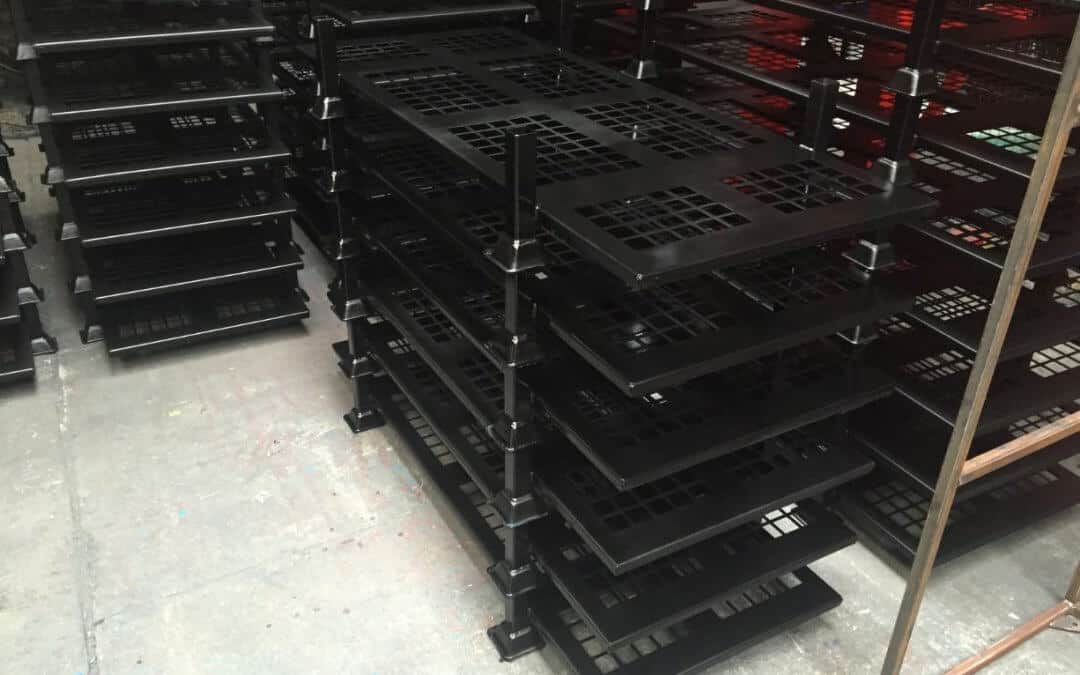
A post pallet is a steel pallet with removable or fixed vertical posts at each corner. The base is solid steel, and the posts sit in sockets with cupped locating feet so that a second pallet can stack cleanly on top of the first. The sides are open between the posts, which makes the load easy to see, pick and count.
The four-post design is the UK standard, but six-post and eight-post variants are common where long, heavy or irregular loads need extra containment. The posts themselves are almost always demountable. Lift them out and the base becomes a flat pallet, which saves floor space when stock is out and cuts return-freight costs for supply chains that move empty pallets around.
Post pallets are stacked rather than racked. Typical stack heights run three to five high when loaded, depending on the base gauge and post length. Because the locating feet sit in the cups of the pallet below, the stack locks into itself and doesn’t need strapping or additional hardware to stay stable.
For more on the format, see our piece on the benefits of post pallets.
What is a box pallet?
A box pallet is a steel pallet with enclosed sides, either in welded wire mesh or solid sheet steel. Some designs have a hinged or drop-down front panel for easier loading and unloading; others have removable sides that lift out for flat storage. The base can be steel, mesh or a timber insert, depending on the intended use.
Mesh-sided box pallets are the common warehouse version: you can see the stock, the cage ventilates and small loose items stay inside. Solid-sided box pallets are specified when the contents need to be hidden, kept clean or protected from dust and debris. A hybrid spec with mesh sides and a solid base is widely used in manufacturing.
Box pallets stack in the same way as post pallets, with corner reinforcements and locating feet. Collapsible box pallets take this one step further: the sides fold or drop flat when empty, reducing storage volume by around 75% and making return journeys considerably cheaper.
Range Storage manufactures box pallets in mesh, steel-sided and plywood-base configurations. See the box pallets range for the standard specifications.
Post pallets vs box pallets: side by side
The single biggest decision is whether the load needs containment. Post pallets assume the load holds its own shape: scaffolding tubes bundled together, machined castings on a base, wheels, stacked plates. Box pallets assume the load doesn’t: loose fixings, small parts, shrink-wrapped goods, bagged components.
Open pallets are easier to pick from and load onto with a side-entry forklift. Enclosed pallets are harder to steal from, cleaner for audits and safer for small items that would otherwise spill during handling.
When post pallets are the right choice
Post pallets earn their place in any operation where the load is large, heavy or self-containing and the priority is speed of handling:
- Scaffolding and tube storage: six and eight-post variants are specified by most UK scaffolding yards.
- Automotive components: wheels, exhaust systems, stamped metal parts, seating assemblies.
- Finished goods with their own packaging: white goods, boxed machinery, palletised drums.
- Open-yard storage: the open sides drain water, resist wind-load and don’t collect debris.
- Loads that need crane slinging: the exposed base corners give clean sling points.
When box pallets work better
Box pallets take over when containment, theft resistance or dust protection matter more than retrieval speed.
- Small parts and fixings: bolts, fasteners, machined components.
- Returns consolidation and e-commerce fulfilment: mixed-SKU loads, cage-to-cage picking.
- High-shrinkage stock: electronics, branded components, tooling.
- Pharmaceutical, food and chemical handling: sheeted bases for cleanable surfaces.
- Transport of loose bulk materials: granulate, aggregates, agricultural products.
A well-chosen box pallet works well for workstation feeding in manufacturing, where components can be drawn down and the cage moved when empty. Collapsible designs reduce return-trip footprint for supply chains that move pallets across sites, which is where the format earns its keep on the cost side.
Load, stacking and durability
Post pallets tend to carry more because the corner posts transfer stack load directly down through the base. Box pallets transfer load through the mesh or steel sides as well, so the design has to spread weight more carefully. For any stack, only the bottom pallet carries the full column weight. Spec to that number, not to the single-pallet SWL.
Made-in-Britain steel pallets built on ISO 9001 lines usually give 15-plus years of service under normal warehouse use, which makes the choice less about format durability and more about what the format does for your workflow. Our weight capacity and load limits guide breaks down the calculation. For the underlying material choice, the steel vs plastic pallet comparison is worth reading alongside.
Specifying the right pallet for the job
Three questions answer most post-vs-box decisions:
- Does the load hold its own shape? If yes, choose a post pallet. If not, pick a box pallet.
- Is shrinkage, dust or contamination a live concern? If yes, box pallet (mesh for visibility, solid for protection).
- Do empty pallets come back, or stay out? If they come back, collapsible box pallets or demountable post pallets save the most on return-trip cost.
Beyond that, the decision is in the spec detail: base gauge, post length, mesh aperture, finish, forklift pocket depth and whether you need powder coating, galvanising or a bespoke colour. See our full buyer’s guide to choosing the right stillage for the checklist, and our overview of British-manufactured metal pallets for why UK build matters on lead time and traceability.
Spec it once, buy it right
A metal pallet is a 15-year decision in a five-minute conversation. Get the format right at the quote stage and the handling savings compound for the life of the asset. Get it wrong and you’ll end up running two pallet fleets in parallel because one won’t cover the job.
Range Storage manufactures both post pallets and box pallets, built on British steel and finished in our own powder coating line. Whether you need post pallets or a mesh, sheet-steel or plywood-base box pallet from the wider metal pallets range, we’ll quote to your spec and your lead time. For anything bespoke, talk to our team about a CAD-designed build.

Recent Comments