
Choosing the wrong stillage can quietly eat into your time, your budget, and even the accuracy of your inventory. Small parts slip through gaps, goods get damaged, and staff spend extra minutes just trying to see what’s inside. It’s surprising how much impact the choice between mesh vs solid stillages can have – on forklift handling, specifically, and how efficiently you use your warehouse space, generally.
Our guide looks at the strengths of each type, where they work best, and how to choose the right option for your setup.
What Are Mesh and Solid Stillages?
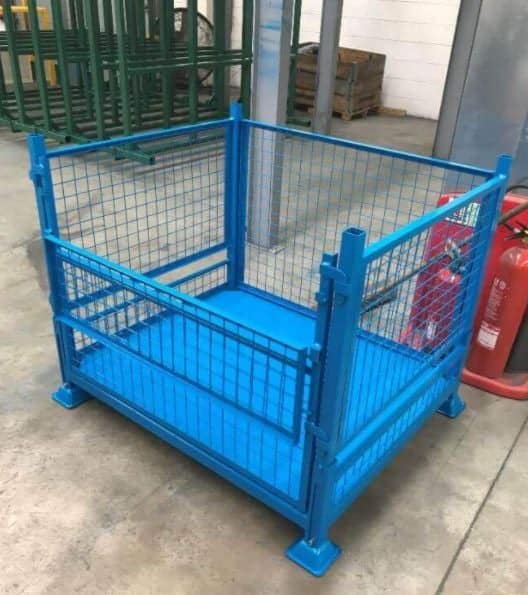
Mesh stillages feature steel frames with wire mesh sides that form a cage-like structure around your stored goods. The open construction allows you to see the stillage’s contents and provides airflow through the unit. They work well when visibility and ventilation matter more than complete containment.
Solid stillages use sheet steel sides instead of wire mesh to create fully enclosed containers that protect their contents from dust, debris, and spillage.
We manufacture both types at our West Yorkshire factory. This in-house fabrication gives us complete control over quality, so our clients know that Range stillages can handle demanding industrial environments.
What Are the Key Benefits of Mesh Stillages?
Mesh stillages deliver practical advantages when you prioritise quick identification and efficient handling.
Visibility and Inventory Control
Wire mesh construction lets warehouse staff identify contents without moving the unit or opening it. This visual access accelerates picking and reduces time spent searching for items. Stock checks also become faster when you can see what’s inside each stillage from multiple angles.
Airflow and Drainage
The open mesh design allows air to circulate freely through stored goods. Parts fresh from washing or coating processes can dry naturally, while dust and debris fall through rather than accumulate at the bottom.
Lightweight Handling
Mesh stillages weigh less than solid alternatives. This weight difference reduces fuel consumption during transport and makes empty units easier to move manually. Forklift operators handle lighter loads, improving efficiency during loading and unloading.
Manufacturing, automotive, and retail distribution operations benefit most from mesh stillages. These sectors handle finished goods, bulky components, or products that require quick visual identification.
What Are the Key Benefits of Solid Stillages?
Solid stillages excel when containment and protection take priority over visibility.
Containment of Small Parts
Sheet steel sides prevent tiny components like washers, pins, or granular materials from escaping. When you’re storing thousands of small fasteners or loose scrap metal, solid stillages eliminate the risk of product loss associated with open-mesh designs.
Better Protection
Heavy-duty solid walls shield contents from forklift tines, dust, splashes, and external impacts. This protection matters when handling expensive components or materials that can’t tolerate contamination. Solid sides also prevent protrusions that might snag on racking or adjacent equipment.
Heavy Load Performance
While mesh and solid stillages handle substantial weights, solid steel walls resist bowing under dense loads better. The rigid construction maintains its shape when you stack heavy materials, providing stability and maximising vertical storage space.
Metal fabrication, foundries, and chemical processing facilities rely heavily on solid stillages. These industries handle heavy scrap, oily components, or materials requiring strict containment throughout the store and transport cycle.
Which Factors Should You Consider When Choosing a Stillage Type?
Several practical considerations determine whether mesh or solid stillages suit your needs better.
- Material characteristics. Small, loose items need solid containment, while larger components work well in mesh designs. Consider whether your goods require airflow for drying or generate dust that requires containment.
- Environmental conditions. Outdoor storage or dusty environments might favour solid stillages that protect contents from weather and contamination. Indoor warehouses with clean conditions can take advantage of mesh visibility.
- Handling and access requirements. High-turnover operations benefit from mesh stillages that speed up identification. Lower-access storage where contents rarely change can use solid stillages without visibility drawbacks. Think about whether you need to stack units and how often you’ll move them.
- Stackable storage needs. Both types of stillages can stack safely, but their contents determine which performs better. Heavy, stable loads stack well in solid units, while lighter, uniform goods suit mesh cage designs.
The best choice depends on your goods, handling frequency, and warehouse layout rather than following a one-size-fits-all approach.
Get Expert Stillage Solutions with Range Storage
Choosing between mesh vs solid stillages comes down to matching the design to your operational reality. Both types deliver value in the right applications, and understanding their strengths helps you better organise your warehouse and protect your inventory.
With over 40 years’ experience manufacturing more than 500,000 stillages in our West Yorkshire factory, we know what works across different industries and applications. Our ISO 9001-accredited processes, skilled design and fabrication team, and complete in-house control (from steel sourcing to powder coating) mean every solution is built to last and tailored to your requirements.
Contact us to discuss your stillage needs. Whether you’re looking for mesh stillages for industrial use or solid stillages for warehouse storage, we’ll help you find the right option for your business.

Recent Comments