The decision between renting vs buying stillages can shape your operation long after the paperwork is signed. Buy outright, and you may find capital tied up in equipment that sits unused for months at a time. Rely too heavily on rental, and ongoing hire costs can quietly overtake the price of ownership.
The right approach comes down to two words: it depends. It depends on how often you use metal stillages, how hard you work them, and what your business genuinely needs from its storage equipment. With decades of experience manufacturing durable, British-made stillages, we’ve seen both strategies work well – when they’re chosen for the right reasons.
What’s the Real Difference Between Renting and Buying Stillages?
We can sum up the main differences as:
- Renting stillages means you pay weekly or monthly fees to use standard steel cages that you return when finished. You avoid the upfront investment and the rental company handles maintenance and repairs.
- Buying means you own the stillages outright after paying the full purchase price. You control everything, from customisation to when and how they’re used.
The financial structures differ significantly. Rental costs count as operating expenses on your books, while purchased stillages become capital assets that depreciate over time. This affects your tax position and how you allocate budgets across financial years.
When Does Renting Stillages Make Sense for Your Business?
Renting stillages offers flexibility, limits long-term commitment, and allows you to respond quickly to changing demand. The key is knowing when that flexibility delivers more value than ownership.
Seasonal Demand and Fluctuating Workloads
If your storage needs rise for a short period and then fall away, owning stillages that sit idle can be inefficient. Renting allows you to increase capacity when demand spikes and scale back just as easily, keeping equipment aligned with actual use.
Short-Term Projects and Fixed Contracts
A three-month project may require extra storage, but permanent ownership can become a burden once the work ends. Renting lets you scale up quickly and return the equipment as soon as the project finishes, without storage or disposal issues.
Preserving Working Capital
When capital is better invested in growth (new machinery, expansion, or staffing), renting spreads costs over time. This helps preserve working capital and keeps funds focused on revenue-generating activity.
Renting may not offer the lowest long-term cost, but when flexibility and cash control matter, it can be the right strategic choice.
Why Do Businesses Choose to Buy Stillages?
For companies that use stillages every day, ownership is often more cost-effective. With consistent use, businesses can reach the break-even point soon, after which each month saves money compared to ongoing rental fees.
Customisation
Many businesses buy because they need stillages that meet specific operational requirements. Standard rental units offer limited dimensions and features. When you require mesh sides for visibility, drop-front gates for easy loading, or precise dimensions to fit your racking system, ownership is the practical choice.
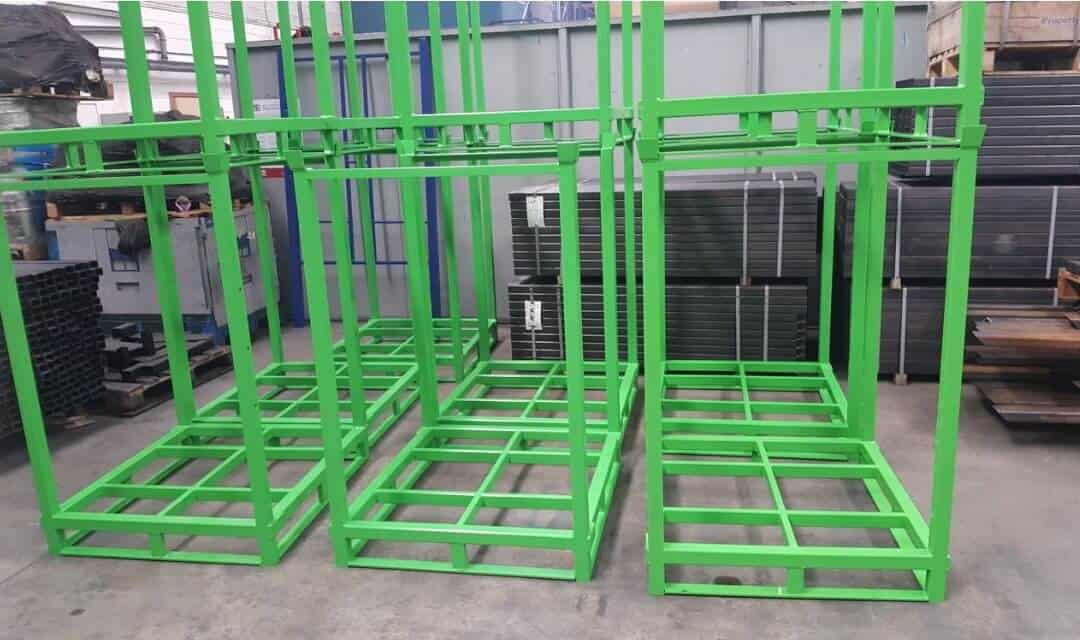
At our West Yorkshire factory, we manufacture bespoke stillages from UK-sourced steel. We can create units in corporate colours, with special heights, or stackable designs to maximise your space.
Guaranteed Availability
Owning stillages also ensures they’re always available when you need them. During busy periods, popular configurations can run short at rental companies. When you own your equipment, you avoid operational delays and maintain full control over your workflow.
How Do You Calculate the Break-Even Point?
Follow these steps to find the break-even point:
1. Compare Rental Costs with Purchase Price
Add up your total annual rental fees and compare them to the purchase price of equivalent stillages. If rental costs reach 60–70% of the purchase price within a year, buying may be the better financial choice.
2. Factor in Maintenance Responsibilities
Rental agreements usually include maintenance, but ownership means you handle all repairs. Well-manufactured steel stillages built to specification require minimal maintenance and often last decades without issues.
3. Consider Resale Value
High-quality metal stillages retain value and can be sold on the secondary market if your requirements change. Unlike disposable alternatives, steel units are long-term assets that continue to deliver returns.
By running these calculations, you can clearly see where ownership starts to pay off.
What About Storage and Maintenance Responsibilities?
When you buy stillages, storage becomes a practical concern. If you own 300 units but use only half during quieter periods, you need space to store the surplus. That could mean dedicating a warehouse or yard area that might otherwise support active workflows. Rental removes this burden. You return equipment when it’s not needed, keeping your space free of idle stock.
Maintenance is another factor. Owned stillages require inspections, welding repairs, and powder coating touch-ups to prevent corrosion and maintain appearance. Rental companies handle all of this for you, saving time and effort.
Which Industries Benefit Most from Buying Stillages?
Some industries benefit from owning stillages because of predictable, high-volume use or the need for bespoke designs. Ownership allows businesses to customise dimensions, integrate with workflows, and protect valuable inventory. Key examples include:
- Manufacturing operations. Work-in-progress storage throughout production cycles makes ownership economical. Custom dimensions fit assembly lines and keep processes running.
- Automotive suppliers. Transporting specialised components requires bespoke stillages. Standard rental units rarely meet these precise requirements, whereas tailored products protect parts and streamline logistics.
- Warehouses with consistent volumes. Stackable, customised stillage systems maximise cubic storage capacity and improve efficiency. This quickly offsets the initial purchase cost.
Partner with Range Storage for Expert Stillage Solutions
Since 1979, Range Storage has helped UK businesses make smart decisions about stillage ownership and rental. We manufacture every steel stillage – from standard pallet cages to fully bespoke designs – in our 25,000 sq ft West Yorkshire factory, using UK-sourced steel and our ISO 9001-accredited processes. With complete in-house control from design to delivery, we ensure each unit meets the highest standards of quality and durability.
Not sure which approach suits your operation? Contact our team. We’ll assess your usage patterns, storage requirements, and operational constraints to recommend the most practical strategy.
As a family-owned business with over 40 years of experience, 500,000+ stillages manufactured, and long-term relationships with major UK retailers and automotive manufacturers, we know what works – and we’ll help you make it work for your business.

Recent Comments