Choosing between stillages and warehouse trolleys isn’t about picking a “better” option. Businesses need to match the right tool to their handling needs. Stillages excel at protecting and storing goods, keeping them secure and organised for the long term. Trolleys, on the other hand, make moving items across warehouse floors straightforward.
Understanding when to use each can improve operational efficiency, reduce handling costs, and protect your products and your team.
What Are Stillages and When Should You Use Them?
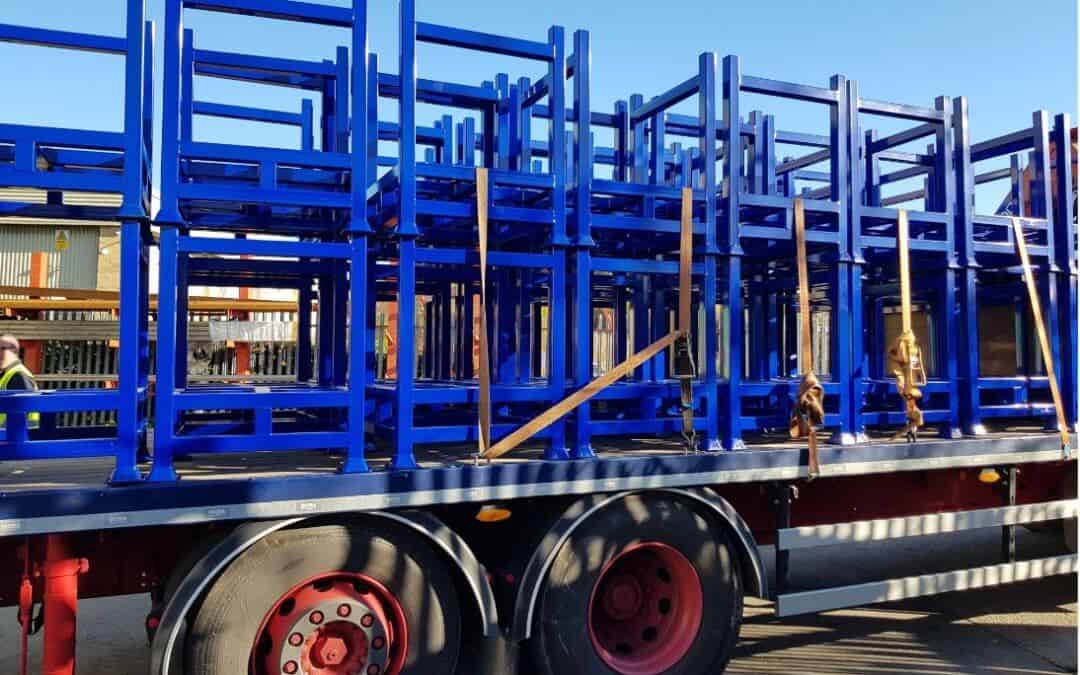
Stillages are steel cages engineered for strength and vertical storage efficiency. Essentially, they’re metal pallets with sides that protect goods during transport while creating stackable units that maximise warehouse space. Think of them as portable steel containers that withstand the demands of industrial environments.
At Range Storage, we manufacture stillages from heavy-duty steel with mesh or solid sides. Their strength allows safe stacking, thereby transforming valuable floor space into efficient vertical storage.
Key Features That Set Stillages Apart
Stillages offer advantages that make them ideal for specific handling challenges:
- Stackability and space efficiency. Interlocking corners or cup feet secure stacked units without needing racking systems. This design lets you store more goods in less floor space.
- Forklift-centric handling. Because stillages have integrated fork pockets, workers can safely move them using mechanical handling equipment. Stillages are perfect for transporting heavy or bulky items that would be impractical (or unsafe) to handle manually.
- Physical protection. Steel sides create a protective cage around the contents. Fragile components, irregularly shaped parts, or loose items that might slide off a standard pallet remain secure during storage and transport.
When Do Stillages Make Practical Sense?
Stillages are ideal for long-term storage where goods sit stacked or in racking for extended periods. Their strength and stackability maximise warehouse space while keeping items secure.
They also excel with heavy, awkward, or delicate loads. Steel stillages handle construction materials, metal components, automotive parts, and other items that exceed safe manual-handling limits. Finally, the cage design protects contents from shifting, crushing, or contamination.
What Are Warehouse Trolleys and When Do They Work Best?
Warehouse trolleys are mobile handling units built for human operation. These wheeled platforms, or carts, allow workers to move goods manually over short to medium distances without mechanical equipment. We manufacture trolleys in a range of configurations, with capacities up to 500kg and options for plywood or weldmesh sides.
Castor wheels give trolleys extra manoeuvrability. Workers can push or pull loaded units through narrow aisles, around tight corners, and into areas where larger equipment won’t fit.
Features That Make Trolleys Practical
Warehouse trolleys excel through characteristics designed for manual handling and quick access:
- Manual manoeuvrability. Castor wheels let workers move loads independently, without waiting for forklift availability. This accelerates operations that require frequent small movements throughout shifts.
- Ergonomic design. Most trolleys keep loads at accessible heights, reducing bending and reaching. Handles provide control during movement, and the wheeled design removes the need to lift heavy items by hand.
- Quick loading and unloading. Open layouts allow workers to place items on trolleys and remove them quickly. This supports fast-paced picking, sorting, and frequent-access tasks.
How Do Stillages and Trolleys Differ in Practical Use?
Stillages and trolleys serve different handling needs. Stillages prioritise strength and vertical storage, making them ideal for heavy items and high-density warehouses. Trolleys focus on manual manoeuvrability and frequent access, letting workers move goods quickly across the floor.
Space use shows the contrast: stillages stack to save floor space, while trolleys occupy it during use (though collapsible models can reduce their footprint when idle).
Load Capacity
Load capacity clearly separates the two solutions. Stillages handle weights from 500kg to well over 1,000kg. This makes stillages well-suited to industrial materials. Trolleys generally max out around 500kg, making them better for smaller batches and frequent movement.
Movement and Workflow
Movement requirements also determine which solution fits your workflow. Stillages need forklift operators and planned transport between locations. Trolleys enable immediate movement by any trained worker. This supports reactive operations where goods must shift throughout the day.
Which Solution Actually Fits Your Operations?
Practical selection comes down to your operational patterns rather than general preferences. The right choice depends on how goods move, how often they’re accessed, and the weight or fragility of your materials. Many operations benefit from a combination of solutions, using each where it works best.
When Stillages Make Sense
Choose stillages when your priority is maximising storage density and handling heavy loads. Operations with forklift access, long-term storage requirements, or bulky components benefit from the strength and stackability of steel cages. The protective framework also suits environments where goods are exposed to impacts or contamination.
When Trolleys Work Best
Select trolleys when manual movement and frequent access drive your workflow. They’re ideal for order picking, fast-paced sorting, or environments where goods move constantly throughout shifts. Trolleys also perform well in areas where forklift operation isn’t practical or safe.
Combining both solutions often delivers the best results. Use stillages for bulk storage in racking systems and trolleys to move goods to packing or workstations. This approach balances high-density storage with flexible handling.
Improve Your Material Handling with Range Storage
Since 1979, Range Storage has manufactured stillages and trolleys for UK operations. We combine over 40 years of experience with a deep understanding of the practical challenges different handling solutions address. From our 25,000 sq ft West Yorkshire factory, our design team and welders create bespoke products tailored to your operational needs. Every product is built to last using UK-sourced steel and delivered with ISO 9001 accreditation.
Whether you require heavy-duty stillages for high-density storage or manoeuvrable trolleys for frequent picking, we can help you identify the system that improves efficiency and protects your investment. With complete in-house control, we ensure every solution meets your specifications.
Get in Touch Today
Contact us to discuss your material handling requirements and discover how our British-made, quality-focused solutions can support your business for years to come.

Recent Comments