
Logistics operations are under increasing pressure to reduce their environmental impact without compromising efficiency. Disposable packaging, single-use pallets, and short-life handling equipment create waste, inflate costs, and add to landfills. These are consequences that modern businesses can no longer afford to ignore.
Steel stillages offer a proven alternative. Designed for long-term use, sustainable stillages reduce reliance on throwaway packaging while supporting circular economy principles that prioritise reuse, durability, and resource efficiency. Built to last for decades, they help warehouses and transport operations lower waste, protect budgets, and move towards a more responsible logistics model.
Why Does Sustainability Matter in Logistics and Warehousing?
Warehouses generate significant waste through packaging materials and damaged handling equipment. Wooden pallets splinter and degrade over time. Plastic alternatives crack under heavy loads. Every replacement cycle consumes raw materials, manufacturing energy, and transport fuel. This increases costs and carbon emissions.
Sustainable storage solutions break this cycle. They reduce the need for constant replacement, limit waste sent to landfill, and lower the environmental impact of material handling. By investing in durable equipment, businesses can strengthen their sustainability credentials while improving long-term operational efficiency.
What Makes Steel Stillages a Sustainable Choice?
Properly manufactured, metal stillages can serve businesses for decades rather than months. This longevity underpins their environmental credentials.
Exceptional Durability Reduces Replacement Cycles
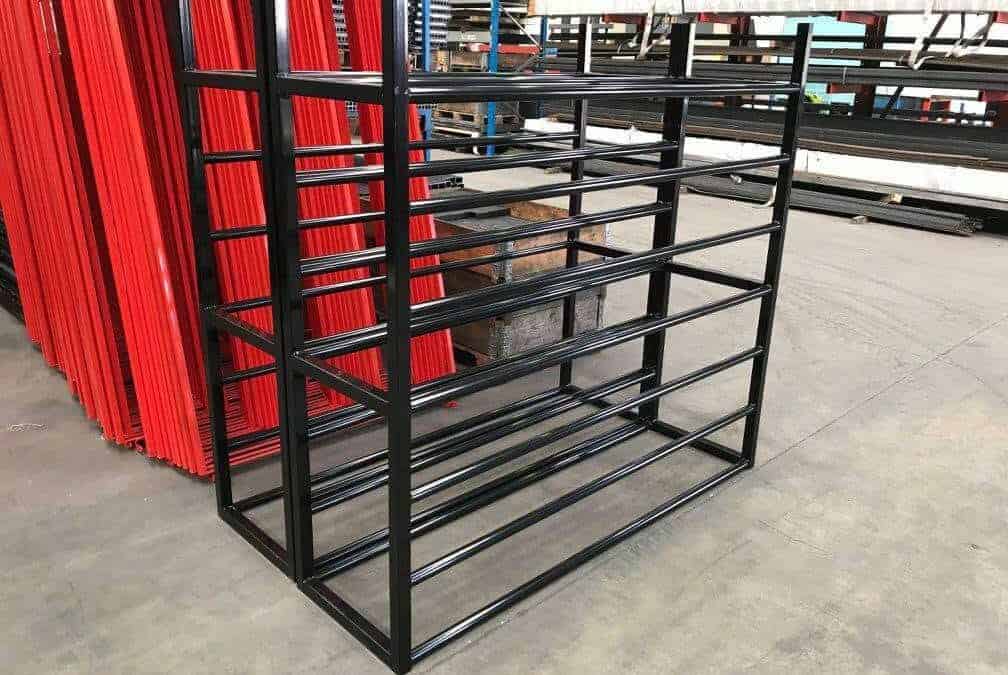
High-quality steel stillages can handle the realities of busy warehouse environments, from forklift impacts to repeated loading and unloading. We manufacture ours in our West Yorkshire factory, using welded construction and a powder-coated finish that protects against corrosion and everyday wear.
Over its lifetime, a single stillage can replace dozens of wooden pallets or plastic alternatives. Its stackable design also helps you make better use of valuable vertical space. Together, these benefits cut manufacturing demand, transport emissions, and disposal costs.
Complete Recyclability at End of Life
Steel is one of the few materials that businesses can recycle repeatedly without any loss of strength or quality. When all stillages reach the end of their working life (often after 15 to 20 years), the material doesn’t become waste. Instead, it re-enters the production cycle, gets melted down and reused in new products.
This closed-loop recyclability means steel stillages rarely end up in landfill, supported by their intrinsic scrap value. Their recovery and recycling become economically viable.
Repairable Rather Than Disposable
Unlike disposable alternatives, steel stillages should be repaired, not written off. Users can reinforce damaged welds, replace mesh panels, and refresh powder coating. This extends the stillage’s service life well beyond the original deployment.
How Do Steel Stillages Support Circular Economy Principles?
The circular economy framework (reduce, reuse, remanufacture, recycle) maps how steel stillages function in logistics operations.
Reduce
With high-strength steel, we can build stillages that use less material while maintaining load capacity. Thinner-gauge steel can support heavier loads, reducing raw material use. Stackable and nestable designs also cut transport emissions, because you can fit more empty stillages per lorry journey. This helps to improve supply chain efficiency.
Reuse
Steel stillages adapt to changing operational needs. For example, businesses can redeploy a unit built for automotive components to other products or sites. Features like drop-down gates and interchangeable mesh panels enable modifications to accommodate new access or storage requirements. This reuse extends service life and avoids unnecessary replacement.
Remanufacture
After years of use, businesses can refurbish stillages to an ‘as-new’ condition. This includes replacing worn parts, repairing damaged components, and applying fresh powder, while the main structural frame continues to serve. Refurbishing preserves the energy and materials invested in the original manufacture and delivers reliable equipment at a fraction of the cost of new units.
Recycle
When repair is no longer viable, stillages enter the steel recycling stream instead of waste. Every UK-sourced steel unit can be melted down and reused, maintaining strength and quality. Steel’s magnetic properties make separation simple and efficient, ensuring high recovery rates.
What Environmental Benefits Do Steel Stillages Deliver Over Alternatives?
A direct comparison highlights the environmental advantages of steel stillages. Wooden pallets depend on timber harvesting and chemical pest treatments, yet still suffer from splintering and moisture damage. Many need replacing within two to three years and often end up in landfill. Plastic alternatives avoid rot but rely on petroleum-based production and can fail under heat or heavy loads. This can lead to early disposal.
Steel stillages avoid these issues. They don’t need chemical treatments, resist pests naturally, and perform reliably in temperature extremes (compared to plastic). Their long service life also reduces the number of units that need manufacturing over time. This helps to cut material use, transport emissions, and environmental impact.
How Do British-Made Stillages Improve Sustainability?
Manufacturing in the UK with locally sourced steel cuts transport emissions. Steel shipped from overseas adds carbon costs before the stillage even enters service. Our West Yorkshire factory uses steel sourced exclusively within the UK. This reduces supply chain length, supports British steelmakers, and gives us complete quality control over materials. Shorter distances between the factory and the customer further reduce transport impacts.
British manufacturing standards also ensure proper working conditions and environmental compliance throughout production. This transparency matters when evaluating true sustainability credentials.
Partner with Range Storage for Sustainable Solutions
For over 40 years, we’ve designed and manufactured steel stillages. Since 1979, we’ve produced more than 500,000 units in our British factory, many of which remain in daily use across the UK. That longevity reflects our uncompromising approach to quality and engineering.
With complete in-house control from design to fabrication and finishing, we create bespoke stillage solutions tailored to your operation. Using UK-sourced steel and working to ISO 9001 standards, our design team and skilled welders build post pallets, trolleys, and custom mesh stillages that improve efficiency while reducing waste and replacement cycles.
To strengthen your sustainability performance without sacrificing value, contact our team. We’ll help you specify steel stillages that support your environmental goals and perform reliably for years to come.

Recent Comments